 Smthing Creations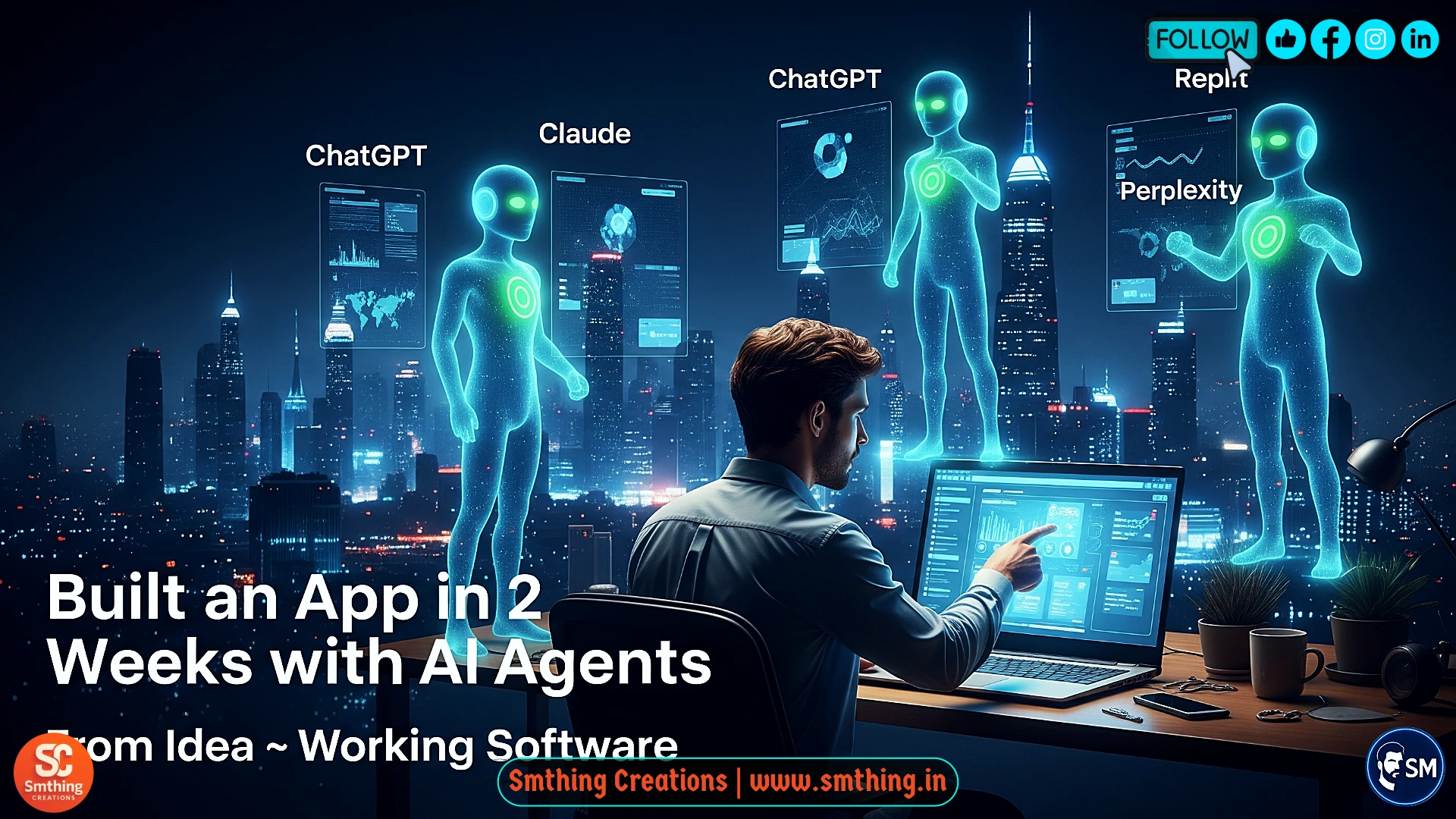
The Problem That Started Everything
Six months ago, I was drowning in the chaos of freelance client management, and I'm sure many independent professionals can relate to this struggle. I constantly found myself losing track of important client communications, forgetting when I last checked in with certain clients, and having no clear system for identifying which business relationships needed immediate attention versus those that were thriving on their own. The stress of potentially disappointing clients or missing important follow-up opportunities was keeping me awake at night and affecting the quality of my work during the day.
Like many creative professionals, I knew exactly what kind of solution I needed - a simple system that could help me track client relationships, identify when someone needed attention, and provide clear insights about the health of my business relationships. However, I faced the same barrier that stops millions of people from turning their ideas into reality: I had zero programming experience and couldn't afford to hire professional developers to build a custom solution for my specific needs.
That's when I discovered something revolutionary that changed everything about how I approach problem-solving and business development. Instead of trying to learn complex programming languages or spending thousands of dollars on custom development, I learned to work with AI agents as intelligent team members who could handle the technical implementation while I focused on defining the solution and guiding the overall process. This approach allowed me to build a complete, functional application in just two weeks without writing a single line of code from scratch.
The application I created not only solved my own client management challenges but also demonstrated a repeatable methodology that anyone can use to transform their ideas into working software solutions. The process was so effective and accessible that I've since used the same approach to build several other applications, and I want to share exactly how you can do the same thing for your own business challenges or creative projects.
Understanding AI Agents as Your Development Team
The breakthrough in my thinking came when I stopped viewing AI tools as simple question-and-answer systems and started treating them as specialized team members with distinct skills and personalities. Just like assembling a human team for a complex project, I learned to leverage different AI agents for their unique strengths and capabilities. This approach transforms the overwhelming challenge of building an application into a manageable process of coordination and collaboration with intelligent partners who can handle the technical complexity.
ChatGPT serves as the creative brainstorming partner and project coordinator, excelling at generating ideas, breaking down complex projects into manageable steps, and providing guidance on strategic decisions throughout the development process. This AI agent has an incredible ability to understand context, maintain conversation continuity across multiple sessions, and adapt its responses to your specific skill level and project requirements. When you need creative solutions, alternative approaches, or help organizing your thoughts, ChatGPT becomes your go-to collaborator.
Claude functions as the analytical strategist and quality assurance specialist, bringing a more methodical and thorough approach to problem-solving and project analysis. This AI agent excels at identifying potential issues before they become problems, analyzing the logic and feasibility of proposed solutions, and providing detailed critiques that strengthen your overall project strategy. Claude's responses tend to be more structured and comprehensive, making it ideal for reviewing ideas, planning architectures, and ensuring your project addresses all necessary considerations.
Perplexity operates as your dedicated research assistant, providing access to current information from across the internet and helping you understand the competitive landscape, market conditions, and user expectations for your project. Unlike other AI agents that work from their training data, Perplexity can search for and synthesize the most recent information about similar solutions, pricing models, user reviews, and industry trends. This real-time research capability is essential for making informed decisions about features, positioning, and market viability.
Replit serves as your technical implementation partner and development environment, transforming your ideas and specifications into working code through an intuitive, browser-based platform that requires no complex setup or configuration. This AI-enhanced development environment can generate code based on natural language descriptions, provide real-time feedback on functionality, and deploy your finished application with minimal technical complexity. Replit essentially democratizes software development by making it accessible to anyone who can clearly describe what they want to build.
Phase One: Ideation and Concept Development
Creative Brainstorming with ChatGPT
The most challenging part of any development project is often identifying exactly what to build and ensuring that your solution addresses a real problem that people are willing to invest time or money to solve. I began this phase by having an extensive brainstorming session with ChatGPT, approaching the conversation as I would with a creative partner who could help me explore possibilities I might not have considered on my own. The key to effective brainstorming with AI is providing detailed context about your challenges while remaining open to unexpected suggestions and alternative approaches.
My initial prompt was comprehensive but focused: "I'm a freelancer struggling with client relationship management. I often forget when I last communicated with clients, miss opportunities for follow-up, and have trouble identifying which business relationships need attention versus those that are healthy and stable. I want to build a solution for this problem but have no programming experience. Can you provide ten specific project ideas that would address these challenges while being simple enough for someone like me to potentially build with AI assistance?"
ChatGPT's response exceeded my expectations, providing not just a list of ideas but detailed explanations of how each solution would work, what problems it would solve, and why it might be particularly effective for freelancers and small business owners. One concept immediately stood out: a "Client Health Tracker" that would use simple metrics and visual indicators to show the status of each business relationship at a glance. This idea resonated because it addressed my core problem while being straightforward enough to implement without overwhelming complexity.
Strategic Analysis with Claude
With a promising concept identified, I needed to think through the practical implications, potential challenges, and opportunities for improvement before committing to development. This is where Claude's analytical strengths became invaluable. I presented the Client Health Tracker concept and asked Claude to examine it from multiple perspectives: "Help me analyze this Client Health Tracker idea thoroughly. What potential problems or limitations should I consider? What aspects of the solution might I be overlooking? How could I strengthen the concept to make it more valuable and sustainable?"
Claude's analysis revealed several critical considerations that I hadn't initially thought about, including data privacy and security concerns, the importance of keeping the interface simple enough for busy professionals to actually use consistently, and the need to balance automated tracking with meaningful insights about relationship quality rather than just activity metrics. The AI also suggested ways to differentiate the solution from existing tools by focusing specifically on relationship maintenance rather than lead generation or sales pipeline management.
This collaborative refinement process with Claude helped transform a good initial idea into a robust concept that addressed real user needs while avoiding common pitfalls that cause many applications to fail in the market. The combination of ChatGPT's creative ideation and Claude's analytical review created a foundation strong enough to support the entire development process that would follow.
Phase Two: Market Research and Validation
Before investing time and effort into building any solution, I needed to understand the current market landscape, identify existing competitors, and validate that there was genuine demand for the type of tool I was considering. This research phase is crucial because it prevents you from building something that already exists in better form or addresses a problem that people aren't actually willing to solve. Perplexity became my primary research partner for this comprehensive market analysis.
My research focused on several key questions that would determine whether the project was worth pursuing: "What client relationship management tools currently exist for freelancers and small business owners? What are their pricing models, key features, and main limitations? What do user reviews reveal about gaps in current solutions? Is there room in the market for a simpler, more focused alternative?" Perplexity's ability to search current information and synthesize findings from multiple sources made this research process both thorough and efficient.
The research revealed several important insights that shaped my development strategy. Existing solutions like HubSpot CRM offered powerful features but were designed for larger sales teams and felt overwhelming for individual freelancers. Paid options like Pipedrive provided good functionality but cost more than many solo professionals wanted to spend on relationship management tools. Most freelancers were using basic spreadsheets or informal note-taking systems that provided no insights or automation capabilities.
This market analysis confirmed that there was indeed a gap for a solution specifically designed for freelancers and small business owners who needed simple, affordable relationship management without the complexity and cost of enterprise-focused tools. The research also revealed that users consistently complained about tools being too complicated to set up or requiring too much ongoing maintenance to provide value. These insights directly informed my design decisions and feature prioritization throughout the development process.
Phase Three: Project Planning and Architecture
Breaking Down Complexity with ChatGPT
With market validation complete and a clear concept defined, I needed to transform the abstract idea into a concrete development plan with specific phases, deliverables, and success criteria. This planning phase is critical because it prevents the overwhelming feeling that often stops people from completing ambitious projects. ChatGPT excelled at helping me break down the seemingly complex task of building an application into manageable steps that I could tackle one at a time without getting overwhelmed by the full scope of the project.
I approached this planning session by asking ChatGPT to think like an experienced project manager: "I want to build a Client Health Tracker application for freelancers. Please break this project into four distinct phases, starting with the minimum viable product that would still provide real value to users. Each phase should build on the previous one while remaining achievable for someone with limited technical experience working with AI development tools."
The resulting development plan was both logical and motivating. Phase One focused on core functionality including user authentication, basic client data management, and a simple dashboard with health score calculations. Phase Two would add relationship tracking, communication logging, and automated alerts for clients requiring attention. Phase Three would introduce trend analysis, reporting features, and optimization suggestions. Phase Four would expand to mobile optimization, integrations with email and calendar systems, and advanced analytics capabilities.
This phased approach was brilliant because it allowed me to build and test a working solution quickly while providing a clear roadmap for future enhancements based on user feedback and changing requirements. Instead of trying to build everything at once and risking never completing anything, I could focus on delivering value immediately while maintaining momentum through achievable milestones and incremental improvements.
Technical Architecture and Design Planning
Before beginning actual development work, I needed to make several important decisions about the technical architecture, user interface design, and core functionality that would guide the implementation process. Rather than trying to figure this out on my own, I leveraged ChatGPT's ability to think from different expert perspectives by asking it to analyze my project from the viewpoints of a user experience designer, a software architect, and a business strategist.
From a user experience perspective, ChatGPT emphasized the importance of progressive disclosure, starting new users with a single client entry and immediately showing them valuable insights before introducing additional features and complexity. The AI recommended using intuitive visual indicators like color coding (green for healthy relationships, yellow for attention needed, red for urgent follow-up required) and designing for mobile-first usage since busy professionals would likely access the tool on various devices throughout their day.
The technical architecture recommendations focused on simplicity and reliability, suggesting a web-based application using standard technologies that would be easy to maintain and expand over time. ChatGPT provided specific code examples and database structures that I could use as starting points, along with explanations of why certain approaches would be more maintainable and user-friendly than alternatives. This guidance was invaluable for someone without extensive technical background who needed to make informed decisions about implementation details.
Phase Four: Implementation with Replit
Setting Up the Development Environment
The actual development phase began with setting up my workspace in Replit, a cloud-based development platform that eliminated the need for complex software installation or configuration on my local computer. This accessibility was crucial because it allowed me to focus on building functionality rather than wrestling with technical setup issues that often discourage beginners from completing their projects. Replit's browser-based interface meant I could work on my application from anywhere while maintaining access to powerful development tools and AI assistance.
Replit's integrated AI assistant, called Ghostwriter, became an invaluable partner throughout the development process. Instead of needing to learn complex programming syntax or memorize function libraries, I could describe what I wanted to accomplish in natural language and receive working code that I could immediately test and modify. This approach transformed programming from a barrier into a creative process where I could experiment with ideas and see immediate results without getting stuck on technical implementation details.
The development process followed the phased plan I had created with ChatGPT, starting with the most basic functionality and gradually adding features as each component was tested and proven to work correctly. Week one focused on creating the fundamental structure: user authentication, basic client data entry forms, and a simple dashboard that displayed client information with calculated health scores. Week two added communication tracking, automated alerts, and visual indicators that made the application immediately useful for daily client management tasks.
Iterative Development and Problem-Solving
Throughout the development process, I encountered numerous technical challenges and design decisions that required creative problem-solving and learning new concepts on the fly. Rather than getting stuck or giving up when I hit obstacles, I learned to leverage the AI team approach by bringing specific problems to the most appropriate AI agent for guidance and solutions. This collaborative problem-solving approach turned challenges into learning opportunities while maintaining steady progress toward project completion.
For example, when I needed to implement a feature that calculated how many days had passed since the last communication with each client, I simply described the requirement to Replit's AI: "I need a function that compares the last contact date with today's date and returns the number of days between them, formatted in a user-friendly way." Within seconds, I had working code that not only solved the immediate problem but also included error handling and edge case management that I wouldn't have thought to include on my own.
Similarly, when I wanted to make the application mobile-friendly, I didn't need to learn responsive web design principles from scratch. I asked the AI to "modify this interface to work well on smartphones and tablets," and received updated code that automatically adjusted layouts, button sizes, and navigation elements for different screen sizes. This AI-assisted approach allowed me to implement professional-quality features without spending months learning the underlying technical concepts.
Results and Lessons Learned
What I Built in Two Weeks
After two weeks of focused development work, spending approximately two hours each evening on the project, I had created a fully functional client relationship management application that solved my original problem and provided value that extended far beyond my initial expectations. The finished application included a clean, professional dashboard showing all clients with color-coded health indicators, intuitive forms for adding and updating client information, automatic calculation of relationship health scores based on communication frequency and recency, and a warning system that highlighted clients requiring immediate attention.
The application also featured mobile-responsive design that worked seamlessly across different devices, data export capabilities for creating client reports and backups, and a simple but effective user interface that required minimal training or setup time. Most importantly, the solution actually solved the problem I had set out to address - I was no longer losing track of client relationships or missing important follow-up opportunities, and I had gained valuable insights into patterns and trends in my business relationships.
Beyond the immediate functional benefits, the project demonstrated that the AI-assisted development approach could produce professional-quality results in a fraction of the time and cost required by traditional development methods. The application performed reliably, looked professional, and provided genuine business value - proving that technical expertise, while helpful, is not a prerequisite for building useful software solutions when you have the right tools and methodology.
Key Insights and Transferable Principles
The most valuable outcome of this project wasn't the specific application I built, but rather the realization that I had discovered a repeatable methodology that could be applied to virtually any software development challenge. The combination of strategic planning with ChatGPT, analytical review with Claude, market research with Perplexity, and technical implementation with Replit created a comprehensive approach that addressed all aspects of successful product development from conception through completion.
This methodology proved its versatility when I subsequently used the same approach to build a meal planning application for managing weekly grocery shopping and recipe organization. Despite being a completely different domain with different technical requirements, the five-step process worked equally well: ideation with ChatGPT, strategic analysis with Claude, market research with Perplexity, detailed planning with ChatGPT, and implementation with Replit. The consistency of results across different project types demonstrated that the approach was truly systematic rather than dependent on luck or specific circumstances.
Perhaps most importantly, this experience fundamentally changed my relationship with technology and problem-solving. Instead of seeing technical complexity as a barrier to implementing my ideas, I now view it as a manageable challenge that can be addressed through collaboration with AI partners. This mindset shift has opened up possibilities for innovation and entrepreneurship that I previously considered beyond my capabilities, and I believe it represents a fundamental change in how non-technical people can participate in the digital economy.
The Complete Methodology for AI-Assisted Development
Step-by-Step Implementation Guide
Based on my experience building multiple applications using this AI-assisted approach, I've refined the process into a clear, replicable methodology that anyone can follow regardless of their technical background or the specific type of application they want to create. The key to success is following each step thoroughly while remaining flexible enough to adapt the approach to your specific project requirements and constraints.
The first step involves comprehensive ideation with ChatGPT, where you describe your problem or opportunity in detail and request multiple potential solutions. The key is providing rich context about your situation, constraints, and goals while remaining open to suggestions that might be different from your initial assumptions. Ask for at least ten different approaches and request explanations of how each solution would work and what problems it would solve most effectively.
The second step requires strategic analysis with Claude, taking your most promising ideas and subjecting them to rigorous examination from multiple perspectives. Ask Claude to identify potential problems, suggest improvements, analyze feasibility, and recommend ways to differentiate your solution from existing alternatives. This analytical review process often reveals critical considerations that can make the difference between success and failure in the final product.
The third step involves comprehensive market research with Perplexity, investigating existing solutions, understanding user needs and complaints, analyzing pricing models, and identifying opportunities for innovation or improvement. This research phase is crucial for ensuring that your solution addresses real market needs rather than solving problems that people don't actually consider worth solving.
The fourth step returns to ChatGPT for detailed project planning, breaking down your validated concept into achievable phases with specific deliverables and success criteria. Request a phased approach that starts with minimum viable functionality and gradually adds features based on user feedback and market response. This planning phase should also include technical architecture recommendations and user experience guidelines that will inform the implementation process.
The final step involves actual development using Replit or similar AI-assisted development platforms, where you transform your plans into working software through iterative implementation and testing. The key is starting with the simplest possible version that provides real value, then gradually adding features while maintaining focus on user needs and practical functionality rather than technical complexity for its own sake.