 Smthing Creations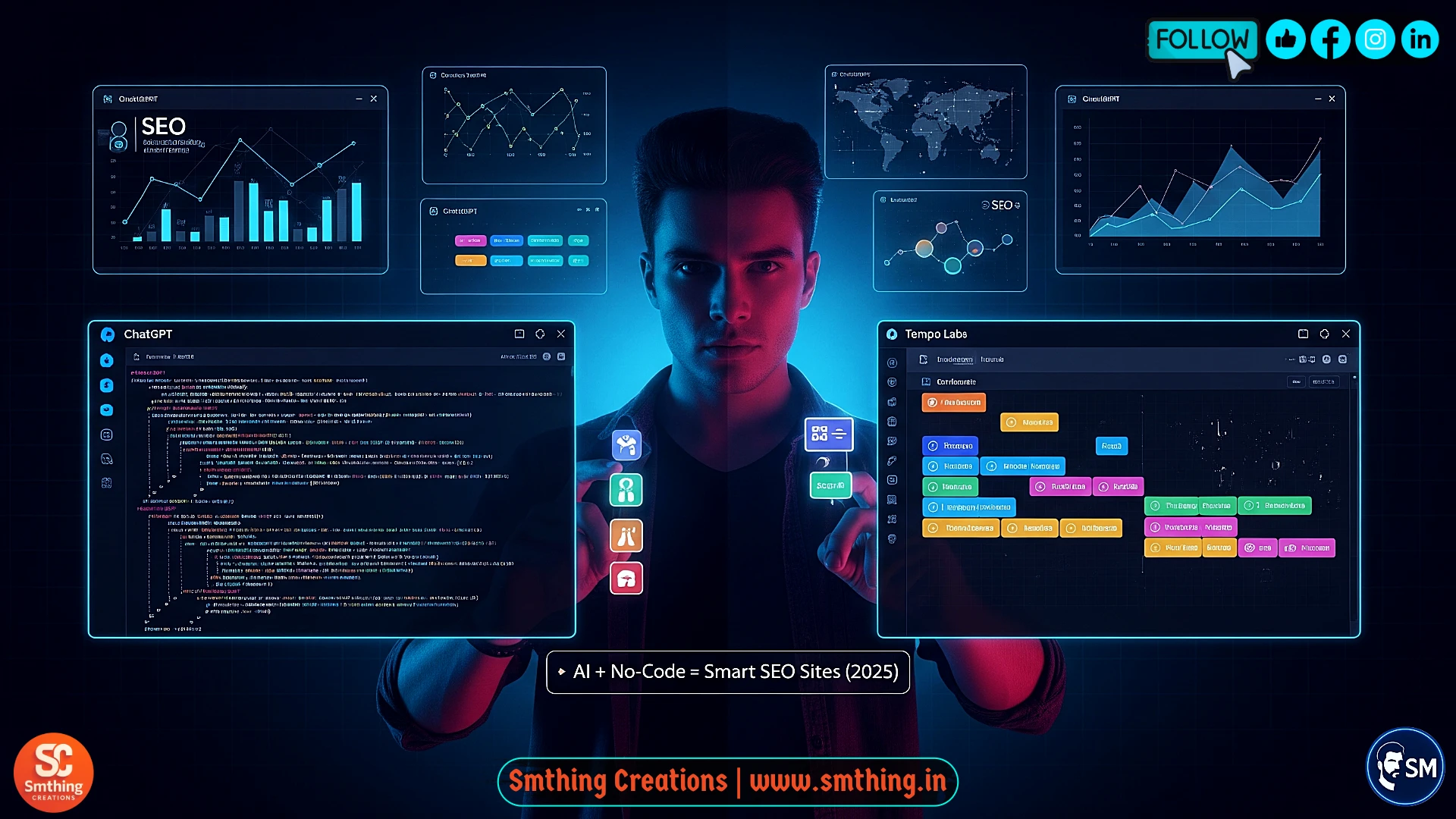
The Web Development Revolution That's Changing Everything
Creating a professional, search engine optimized website used to be an incredibly expensive and time-consuming process that required assembling a team of specialized experts, including web developers, graphic designers, SEO consultants, and content strategists. Business owners would routinely spend thousands of dollars and wait months for completion, only to receive websites that were slow, difficult to maintain, and performed poorly in search engine rankings. The complexity of modern web development created significant barriers for entrepreneurs and small businesses who needed a professional online presence but lacked the budget for comprehensive development teams.
The frustration didn't end with the initial development process either. Making simple changes required going back to developers, implementing SEO improvements meant hiring additional consultants, and ensuring mobile compatibility often required completely rebuilding sections of the website. This dependency on multiple specialists created ongoing costs and delays that made professional web development accessible only to larger businesses with substantial marketing budgets and dedicated technical resources.
However, the landscape of web development has undergone a revolutionary transformation thanks to artificial intelligence tools that can handle complex technical tasks while maintaining professional quality standards. Today, I want to show you exactly how I've been building fast, SEO-optimized websites using just two powerful AI platforms: ChatGPT for strategic planning and code generation, and Tempo Labs for visual development and deployment. This approach eliminates the need for expensive development teams while producing websites that consistently achieve superior performance metrics and search engine rankings.
By the end of this comprehensive guide, you'll have all the knowledge and tools necessary to create lightning-fast, mobile-responsive, search engine-friendly websites that actually attract visitors and convert them into customers. Whether you're a solopreneur launching your first business, a small business owner looking to improve your online presence, or someone who simply wants to build websites as a profitable skill set, this methodology works consistently and produces professional results that rival expensive custom development projects.
Why SEO Performance Is Critical for Website Success in 2025
Understanding the current search engine landscape is essential before diving into website development because Google's ranking algorithms have become increasingly sophisticated and demanding in their requirements for website performance and user experience. The days when you could simply stuff keywords into content and hope for good rankings are long gone. Today's search algorithms evaluate dozens of technical and user experience factors to determine which websites deserve prominent placement in search results, and failing to meet these standards means your website will remain invisible to potential customers.
Core Web Vitals have emerged as one of the most important ranking factors that Google uses to evaluate websites, focusing specifically on loading performance, interactivity, and visual stability. Websites that fail to load within three seconds lose approximately fifty percent of their visitors before the content even appears on screen. Google's algorithms now prioritize websites that provide excellent user experiences, which means slow-loading or poorly structured websites are automatically penalized in search rankings regardless of how good their content might be.
Mobile-first indexing represents another fundamental shift in how search engines evaluate and rank websites. Google now examines the mobile version of your website first when determining search rankings, which means that websites optimized only for desktop computers will perform poorly in search results. This change reflects the reality that over sixty percent of web traffic now comes from mobile devices, and users expect websites to work perfectly on smartphones and tablets without compromising functionality or readability.
The technical architecture of your website also plays a crucial role in search engine optimization success. Proper heading structure, meta descriptions, schema markup, internal linking strategies, and semantic HTML all contribute to how well search engines can understand and categorize your content. Websites built with clean, well-organized code perform significantly better in search results than those created with bloated, inefficient development approaches. This is where the ChatGPT and Tempo Labs combination becomes incredibly powerful, producing clean, optimized code that meets all current SEO requirements while remaining fast and user-friendly.
Essential Tools for AI-Powered Website Development
ChatGPT: Your Strategic Development Partner
ChatGPT serves as the strategic brain of this website development process, providing expert-level guidance on SEO best practices, code generation, content structure, and technical optimization without requiring you to become an expert in any of these complex areas. The AI's ability to think like an experienced web developer, SEO specialist, and content strategist simultaneously makes it invaluable for planning and executing professional website projects. Unlike human consultants who specialize in narrow areas, ChatGPT can provide comprehensive guidance across all aspects of website development while adapting its recommendations to your specific industry, target audience, and business objectives.
The key to leveraging ChatGPT effectively lies in learning to communicate your requirements clearly and asking the right questions to get actionable, specific guidance rather than generic advice. When you prompt ChatGPT to "act like an SEO specialist with ten years of experience" and provide detailed context about your business and goals, the AI generates sophisticated strategies and code that incorporate current best practices and technical requirements. This approach gives you access to expert-level knowledge without the cost and time investment typically required to develop such expertise independently.
Tempo Labs: Visual Development Made Simple
Tempo Labs bridges the gap between complex code development and visual website building by providing an intuitive platform where you can see your website come together in real-time while maintaining complete control over the underlying code structure. This hybrid approach means you get the visual feedback and ease-of-use associated with drag-and-drop website builders, combined with the performance and customization capabilities that come from clean, hand-coded development. The platform excels at translating ChatGPT-generated code into visual interfaces while maintaining the SEO optimization and performance characteristics that make websites successful.
The integration between ChatGPT's strategic planning and Tempo Labs' development environment creates a workflow where technical complexity is handled automatically while you focus on content, design, and user experience decisions. You can paste code directly from ChatGPT into Tempo Labs and immediately see how it looks and functions, then make adjustments using visual tools without needing to understand the underlying programming languages. This approach democratizes professional web development by making it accessible to people who have great business ideas but lack traditional coding skills.
Phase One: Strategic Planning and Architecture
Creating Your Website Blueprint with AI Guidance
Every successful website project begins with comprehensive planning that considers user needs, business objectives, technical requirements, and search engine optimization from the very beginning rather than trying to add these elements after the website is already built. The planning phase sets the foundation for everything that follows, and getting it right prevents costly revisions and performance issues later in the development process. This is where ChatGPT's ability to think systematically about complex projects becomes incredibly valuable for creating professional website architectures.
Begin your planning process by providing ChatGPT with detailed context about your business, target audience, competitive landscape, and specific goals for the website. Ask the AI to act as an experienced SEO specialist and web architect who can create comprehensive site structures that support both user experience and search engine requirements. A well-crafted prompt might be: "Act as an SEO specialist with ten years of experience helping small businesses rank on Google. I need you to create a complete website architecture for a [your business type] that loads quickly, ranks well for relevant keywords, and converts visitors into customers. Include specific recommendations for page structure, heading hierarchy, internal linking strategy, and technical SEO implementation."
The resulting guidance from ChatGPT will typically include detailed recommendations for homepage structure with proper H1, H2, and H3 heading hierarchies that support both readability and SEO, strategic placement of primary and secondary keywords throughout the content, internal linking strategies that help search engines understand your website's structure and priorities, and technical specifications for meta descriptions, schema markup, and other elements that influence search engine rankings. Save this comprehensive blueprint because it will guide every subsequent decision in the development process.
Content Strategy and Keyword Integration
Developing a strategic approach to content creation and keyword integration is essential for building websites that attract organic traffic and convert visitors into customers. Rather than guessing what topics and keywords might be relevant to your audience, use ChatGPT to research and analyze keyword opportunities, competitive content strategies, and user intent patterns that will inform your website's content architecture. This research-driven approach ensures that your website addresses real user needs while incorporating the language and topics that search engines associate with your industry.
Ask ChatGPT to analyze your industry and target audience to identify primary keywords that have sufficient search volume to drive traffic but aren't so competitive that new websites can't rank for them. Request specific recommendations for long-tail keyword opportunities that reflect actual user search patterns and buying intent. For example: "Analyze the fitness coaching industry and identify ten long-tail keywords that new fitness coaches should target to attract clients who are ready to hire professional help. Include search intent analysis and content suggestions for each keyword opportunity."
The AI's analysis will reveal keyword opportunities that you might not have considered while providing insight into the types of content that perform well for businesses similar to yours. This strategic foundation ensures that every page you build serves a specific purpose in attracting and converting your target audience rather than simply existing because you think you need certain pages on your website.
Phase Two: Technical Implementation and Code Development
Building Your Website Structure in Tempo Labs
With your strategic blueprint complete, the actual website building process begins by translating ChatGPT's recommendations into functional code and visual interfaces using Tempo Labs' integrated development environment. This phase involves taking the abstract concepts and structural recommendations from your planning phase and turning them into working website pages that load quickly, look professional, and function correctly across all devices and browsers. The key to success in this phase is building systematically, one component at a time, rather than trying to create everything simultaneously.
Start by creating your homepage structure based on ChatGPT's architectural recommendations, beginning with the navigation system that will provide easy access to all important pages and content sections. Ask ChatGPT to generate specific code for each component: "Generate clean, SEO-optimized HTML and TailwindCSS code for a website header that includes navigation menu, company logo, and mobile-responsive design. The site is for [your business type] and should rank well for [your primary keywords]." The resulting code can be pasted directly into Tempo Labs, where you can see immediate visual results and make adjustments using the platform's visual editing tools.
Build each section of your homepage methodically, creating the hero section that introduces your business and value proposition, the about section that establishes credibility and expertise, services or products section that clearly explains what you offer, the testimonials or social proof section that builds trust with potential customers, and the contact section that makes it easy for visitors to take action. Each section should incorporate the keyword strategy and content recommendations from your planning phase while maintaining a clean, fast-loading code structure that supports good search engine rankings.
Implementing Advanced SEO Features
Technical SEO implementation separates professional websites from amateur efforts, and this is where ChatGPT's expertise becomes particularly valuable for generating complex code that most people would struggle to write manually. Modern SEO requires dozens of technical elements working together harmoniously, including proper meta tag implementation, schema markup for rich search results, Open Graph tags for social media sharing, canonical URLs to prevent duplicate content issues, and structured data that helps search engines understand your content context.
Request comprehensive SEO code from ChatGPT by describing your specific requirements: "Generate complete Next.js metadata configuration for a [business type] website, including title tags, meta descriptions, Open Graph tags, Twitter cards, canonical URLs, and schema markup for a local business. The site should rank for [your target keywords] and display rich snippets in search results." The AI will produce sophisticated code that incorporates current best practices and technical requirements that would take human developers hours to research and implement correctly.
Pay particular attention to Core Web Vitals optimization during this implementation phase, ensuring that your website loads quickly, responds immediately to user interactions, and maintains visual stability as content loads. Use ChatGPT to generate code that includes image optimization, lazy loading, efficient CSS and JavaScript implementation, and proper caching headers that contribute to excellent performance scores. These technical optimizations directly impact your search engine rankings while providing better user experiences that increase conversion rates.
Phase Three: Optimization and Performance Enhancement
Speed Optimization and Mobile Responsiveness
Website performance optimization has become one of the most critical factors determining both search engine rankings and user satisfaction, with Google's algorithms now heavily weighting page speed, mobile usability, and overall user experience when determining which websites deserve prominent placement in search results. Websites that fail to meet performance standards lose both search visibility and potential customers who abandon slow-loading pages before they have a chance to engage with your content or services.
Use ChatGPT to audit and optimize your website's performance by requesting specific code improvements that address common speed and usability issues. Ask the AI: "Analyze my website code and generate optimized versions that improve Core Web Vitals scores, reduce loading time, and ensure perfect mobile responsiveness. Include image optimization, CSS, and JavaScript minification, and lazy loading implementation." The AI can identify performance bottlenecks and provide corrected code that maintains functionality while dramatically improving speed and efficiency.
Mobile optimization requires particular attention because the majority of your website visitors will access your site using smartphones or tablets, and Google's mobile-first indexing means that mobile performance directly impacts search rankings for all devices. Ensure that your website provides excellent experiences on small screens by testing every page and feature on actual mobile devices, not just browser developer tools. Use ChatGPT to generate responsive design code that adapts seamlessly to different screen sizes while maintaining readability, functionality, and visual appeal.
Testing and Quality Assurance
Comprehensive testing ensures that your website functions correctly across different browsers, devices, and usage scenarios while meeting all technical requirements for search engine optimization and user experience. This quality assurance phase prevents embarrassing problems after launch while verifying that all the optimization work you've completed actually produces the intended results in real-world conditions. Systematic testing also identifies opportunities for further improvement before your website goes live and starts attracting visitors.
Use Google's free testing tools to evaluate your website's performance and SEO readiness, including PageSpeed Insights for loading speed analysis, Mobile-Friendly Test for responsive design verification, Rich Results Test for schema markup validation, and Search Console for overall SEO health monitoring. These tools provide objective measurements of your website's performance while identifying specific areas that need attention or improvement before launch.
When testing reveals issues or opportunities for improvement, return to ChatGPT with specific problems and request targeted solutions. For example: "My website scored 85 on PageSpeed Insights mobile performance. The main issues are render-blocking resources and unused JavaScript. Here's my current code [paste code]. Generate optimized versions that eliminate these performance problems while maintaining all current functionality." The AI can quickly identify and resolve technical issues that might take human developers hours to diagnose and fix.
Phase Four: Deployment and Launch Strategy
Going Live with Professional Hosting
The deployment phase transforms your development project into a live website that's accessible to visitors around the world while ensuring optimal performance, security, and reliability. Choosing the right hosting and deployment strategy affects every aspect of your website's success, from loading speed and search engine rankings to ongoing maintenance requirements and costs. Modern deployment platforms offer sophisticated features that were previously available only to large enterprises, making professional-grade hosting accessible and affordable for small businesses and individual entrepreneurs.
Tempo Labs simplifies the deployment process by integrating with popular hosting platforms like Vercel, Netlify, and GitHub Pages, allowing you to publish your website with minimal technical complexity while maintaining access to advanced features like content delivery networks, automatic SSL certificates, and performance monitoring. These platforms handle server management, security updates, and scaling automatically, allowing you to focus on content and marketing rather than technical maintenance issues.
Configure your deployment to include essential features like custom domain setup, SSL certificate activation, performance monitoring, and backup systems that protect your website and provide insights into visitor behavior and technical performance. Use ChatGPT to generate the necessary configuration files and settings: "Create deployment configuration for a Next.js website using Vercel hosting, including custom domain setup, performance monitoring, SEO-friendly URL structure, and automatic backup systems." The AI will provide step-by-step instructions and code that ensures professional deployment standards.
Post-Launch Monitoring and Optimization
Launching your website is just the beginning of an ongoing optimization process that involves monitoring performance, analyzing visitor behavior, tracking search engine rankings, and continuously improving the user experience based on real-world data and feedback. Successful websites evolve constantly in response to changing user needs, competitive pressures, and search engine algorithm updates, making post-launch monitoring and optimization essential for long-term success.
Set up comprehensive analytics and monitoring systems that provide insights into website performance, user behavior, conversion rates, and search engine visibility. Google Analytics 4 provides detailed visitor behavior analysis, Google Search Console monitors search engine performance and identifies optimization opportunities, and tools like Hotjar reveal how users actually interact with your website through heatmaps and session recordings. This data-driven approach enables informed decisions about content updates, design improvements, and feature additions that enhance user experience and business results.
Establish a regular optimization routine that includes monitoring Core Web Vitals scores, reviewing search engine rankings for target keywords, analyzing user behavior patterns, updating content based on search trends and user feedback, and implementing technical improvements that enhance performance and functionality. Use ChatGPT to help interpret analytics data and generate optimization strategies: "Based on these Google Analytics insights [provide data], what content and technical improvements should I prioritize to increase visitor engagement and conversion rates?" The AI can identify patterns and opportunities that might not be immediately obvious from raw data.
Advanced Strategies for Competitive Advantage
Content Marketing Integration
Integrating strategic content marketing into your website architecture creates long-term competitive advantages by establishing your expertise, attracting organic search traffic, and providing ongoing value that keeps visitors returning and sharing your content with others. Rather than treating content as an afterthought, successful websites use content as a strategic tool for achieving business objectives while supporting search engine optimization efforts through targeted keyword coverage and comprehensive topic authority.
Develop a content strategy that addresses your target audience's questions, challenges, and interests while incorporating keyword opportunities identified during your planning phase. Use ChatGPT to generate content ideas, outline structures, and even draft articles that can be customized with your unique insights and experience: "Create a content marketing strategy for a [your business type] website that targets [your audience]. Include 20 blog post ideas that address common customer questions while targeting long-tail keywords with commercial intent." The AI will generate comprehensive content plans that support both user engagement and search engine optimization objectives.
Conversion Rate Optimization
Optimizing your website for conversions ensures that the traffic you attract through SEO efforts actually translates into business results through inquiries, sales, newsletter signups, or other desired actions. Conversion rate optimization involves strategic placement of calls-to-action, reducing friction in user flows, building trust through social proof and testimonials, and creating compelling value propositions that motivate visitors to take action. Small improvements in conversion rates can dramatically increase the return on investment from your website and marketing efforts.
Use ChatGPT to analyze your website's conversion potential and generate specific improvement recommendations: "Review my website structure and suggest conversion rate optimization strategies for a [your business type] that wants to increase [your primary conversion goal]. Include recommendations for call-to-action placement, trust signals, user experience improvements, and compelling offers that motivate action." The AI can identify opportunities for improvement that significantly impact business results without requiring major website redesigns or additional traffic generation efforts.